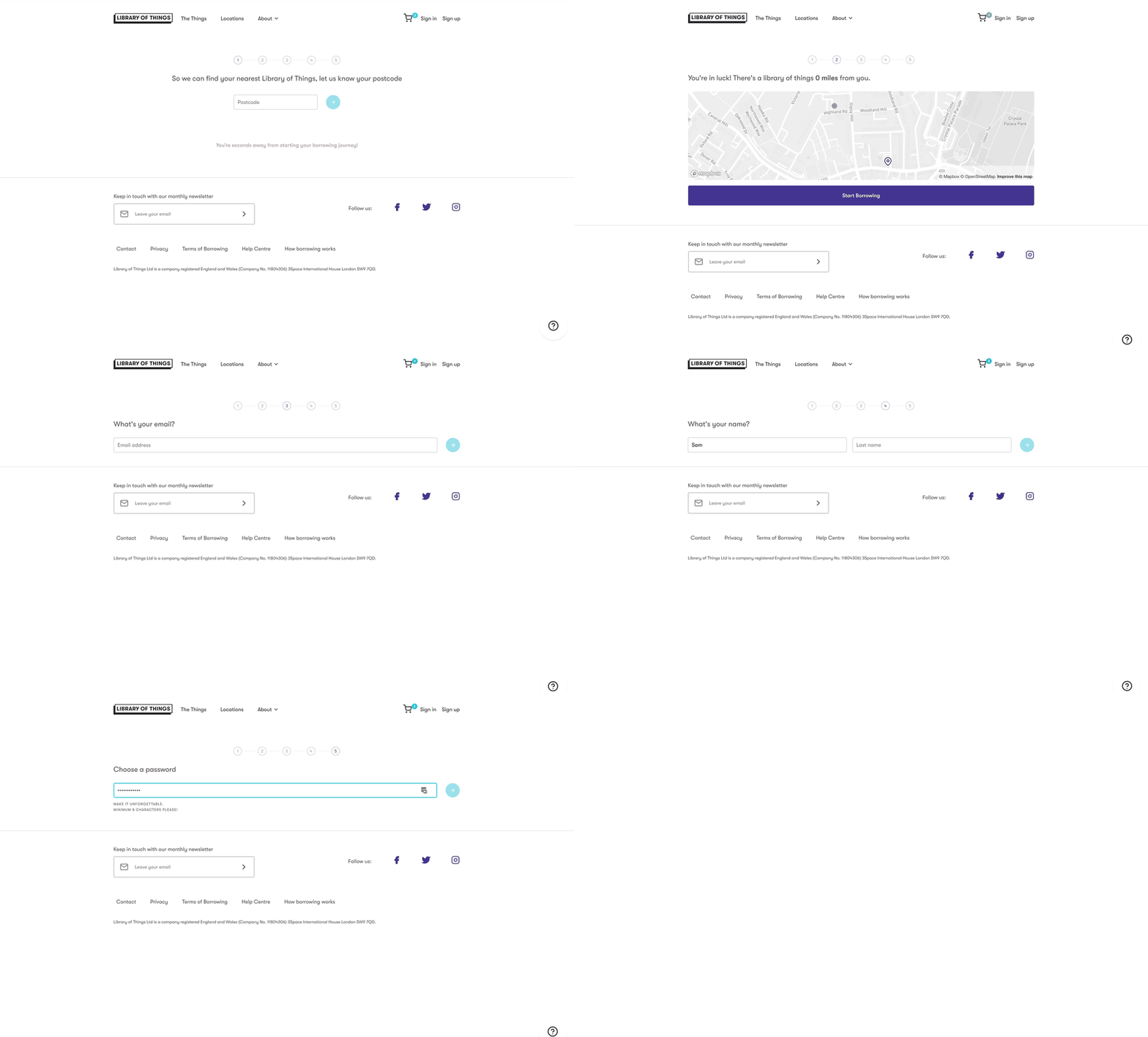
Library of Things was spending heavily across paid social, paid search, and print advertising to acquire users - but the data showed that email was by far the cheapest conversion channel. The problem was that our sign-up flow was working against us: a clunky five-step process that didn't ask for an email address until the very end, after postcode and password. Conversion sat at a respectable 40%.
The hypothesis was simple: if we could collect name, postcode and email address in the first step and use this as an initial sign-up without needing to create an account, we'd capture more email sign-ups even from users who dropped off, and bring down the cost of acquisition for paid users.
The existing flow was old and clunky and was never designed with conversion in mind. Changing it meant getting alignment across marketing, engineering, and the wider product team on what "minimum required" actually looked like.
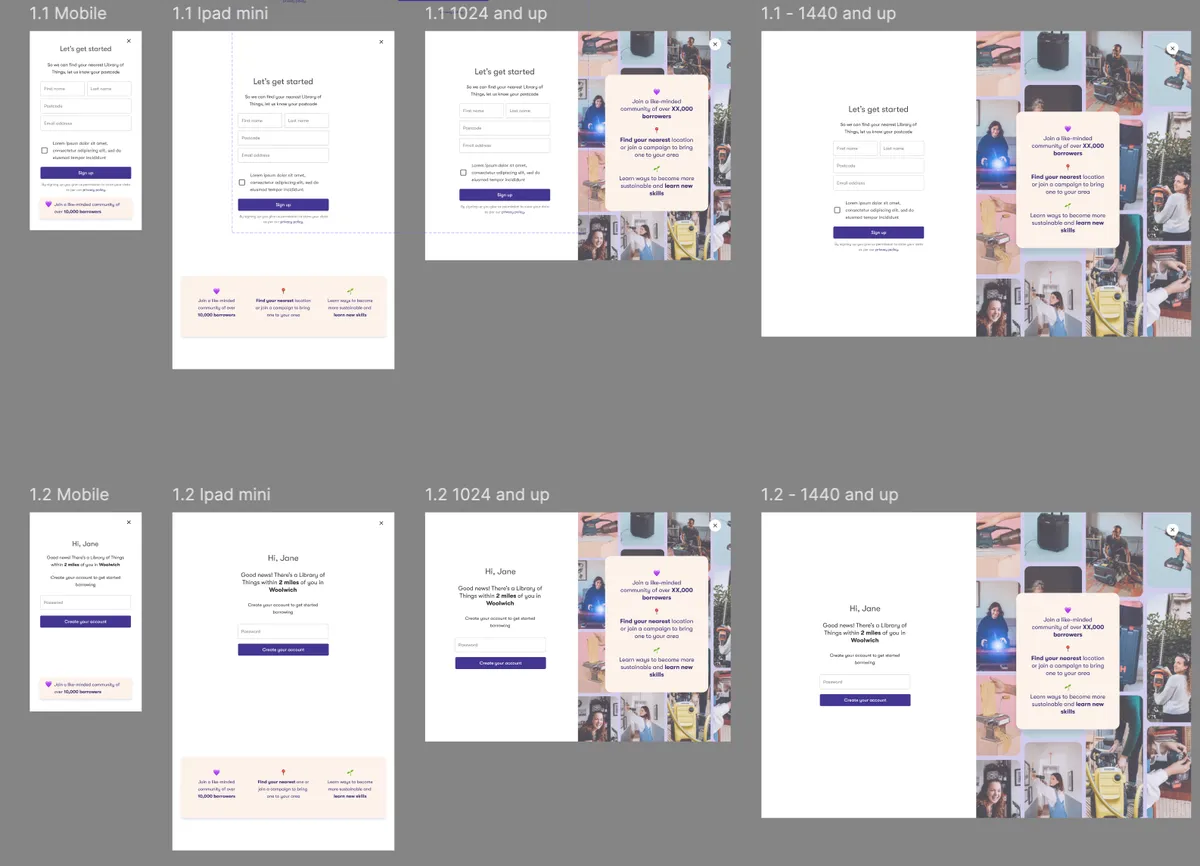
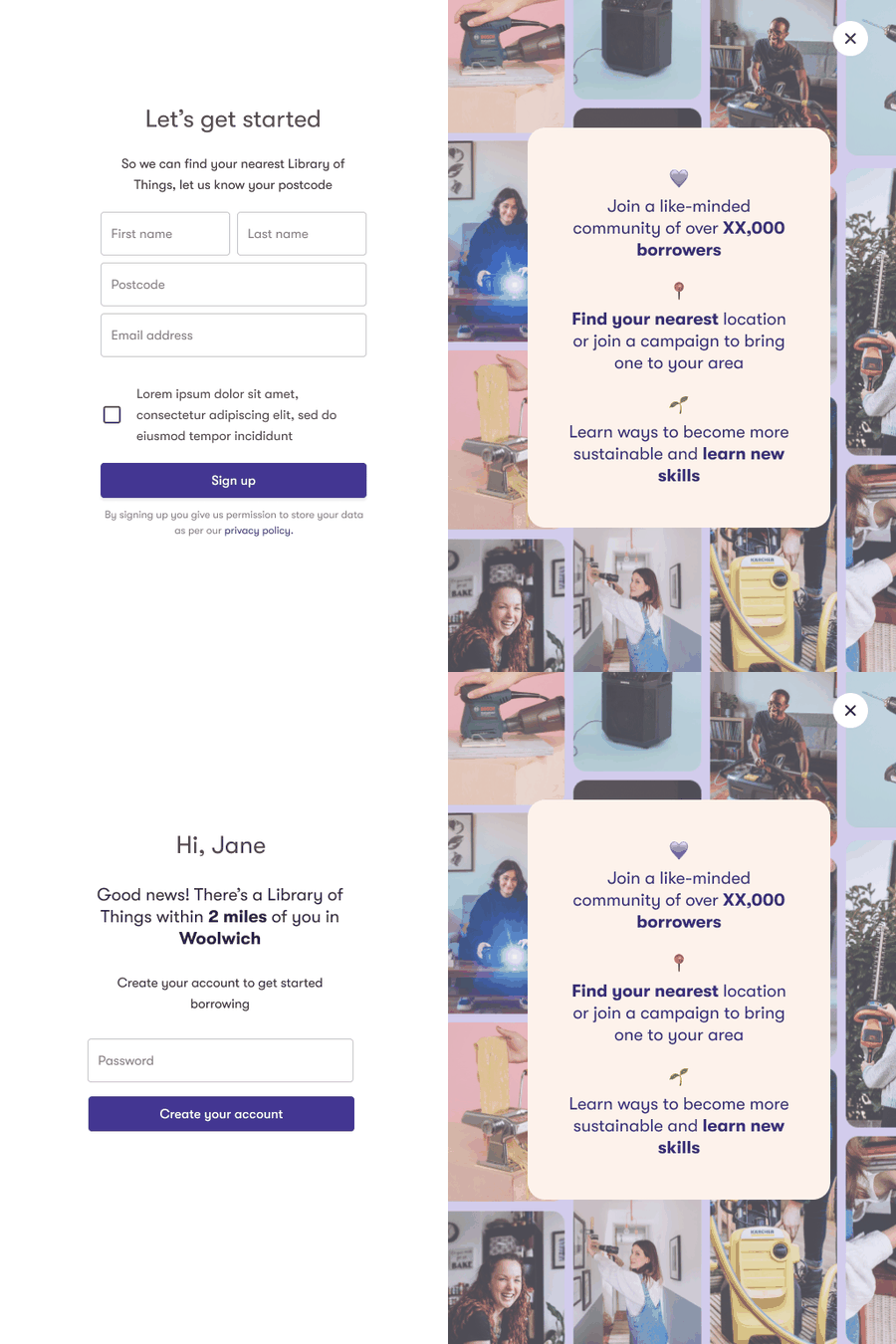
I briefed our designer to concept a two-step flow: step one capturing just name, postcode and email (the minimum needed to market to users and understand if they lived in a serviceable area) and step two allowing users to enter a password to create an account with us.
After iterating internally with the marketing and dev team, we built and launched the new flow in four weeks. We shipped it behind a feature flag so it could be rolled back immediately if conversion dropped, which thankfully didn't happen.
Conversion rate jumped to 78% at launch and has remained above 70% ever since. The improved capture rate meant we could dial back more expensive acquisition channels, reducing marketing spend by around 50p per conversion. In the three years since it shipped, that unit economic saving has compounded significantly across the business.