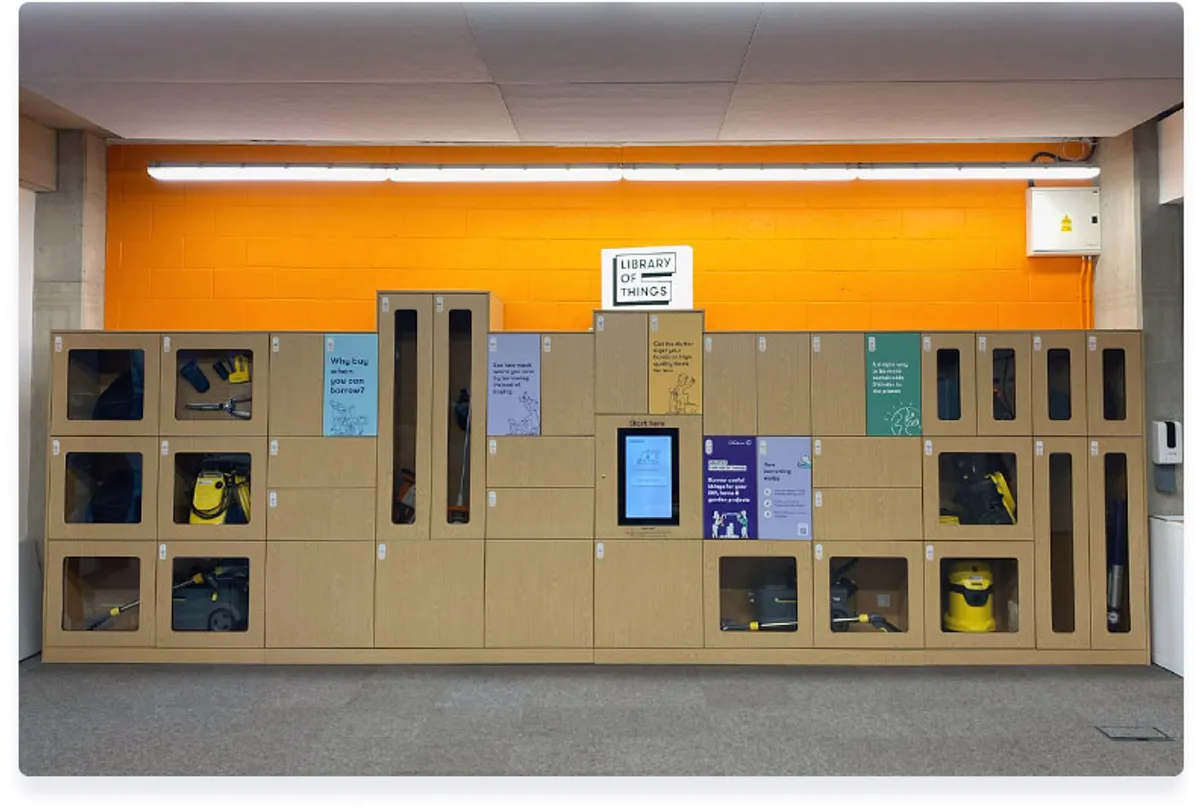
Library of Things' collection and return journey ran through in-person kiosk touchscreens where users authenticated themselves with their email address before they could open the locker(s) containing the item(s). Shortly after joining, I started hearing a consistent signal from the Customer Support team: users were regularly getting stuck during collection and return, leading to frustrated calls and long collection/return times.
Speaking to Customer Support, reviewing user feedback forms, and analysing Google Analytics page timings all pointed to the same bottleneck: the email address entry screen. Typing a full email address on a horizontal touchscreen is slow and error-prone, and it was clearly where users were being held up and resulting in calling Customer Support to assist them, making the self-service selling point redundant.
The hypothesis was that replacing email entry with a short, memorable code would reduce friction at the kiosk, cut support calls tagged as 'collection/return issue', and meaningfully speed up the borrowing experience.
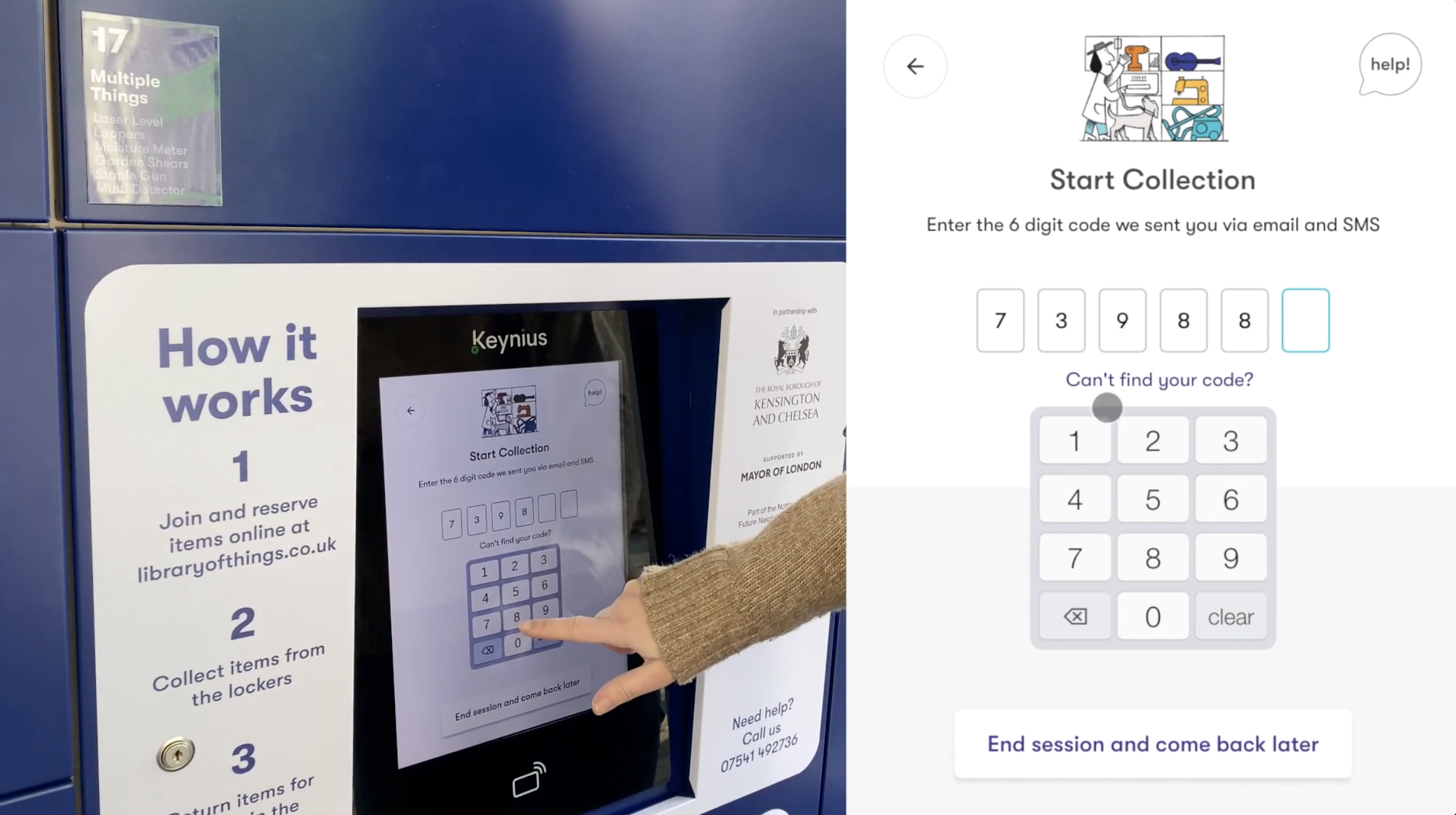
We decided to silently attribute a unique six-digit code to each borrower at sign-up, backfilling codes for all existing users. Crucially, the code would remain the same throughout a borrower's entire lifecycle, with no unique codes for each collection/return. We considered and rejected unique codes as overengineering, since it would be a very long time before we approached 999,999 borrowers, so duplication simply wasn't a risk worth designing around. As for code misuse concerns, users could only open a locker if they have a reservation on that day at that kiosk and have the number, meaning it would be almost impossible for someone to brute force their way into a locker.
To make the code easy to find at the point of need, we introduced SMS messaging functionality alongside the existing email confirmation, so borrowers received their code through both channels and could pull it up quickly at the location.
Rather than rolling out site-wide immediately, we ran a two-month pilot at our Dalston location to catch any edge cases and gather early feedback before releasing successfully to all locations.
Support calls tagged as 'collection/return issue' dropped noticeably after launch, and average time spent at the kiosk fell by around 30 seconds per transaction. A small change in the user journey - replacing a long email field with a six-digit code - had a measurable effect on both operational costs and the borrower experience.